
The performance behind the paving stone is not incidental — it is designed to recognized structural standards. The principles below govern how a segmental pavement carries load, resists movement, and lasts.
BlackTop Enduro™ pavers provide a low-maintenance, heavy-duty pavement wearing course. The success of any pavement depends on proper design, construction, and maintenance. The key design factors for an interlocking paving system are subgrade strength, base thickness, paver thickness, paver aspect ratio, and laying pattern — each addressed below.
Subgrade. Soil types and drainage vary widely, and pavers are suitable for any of them with proper preparation and compaction.
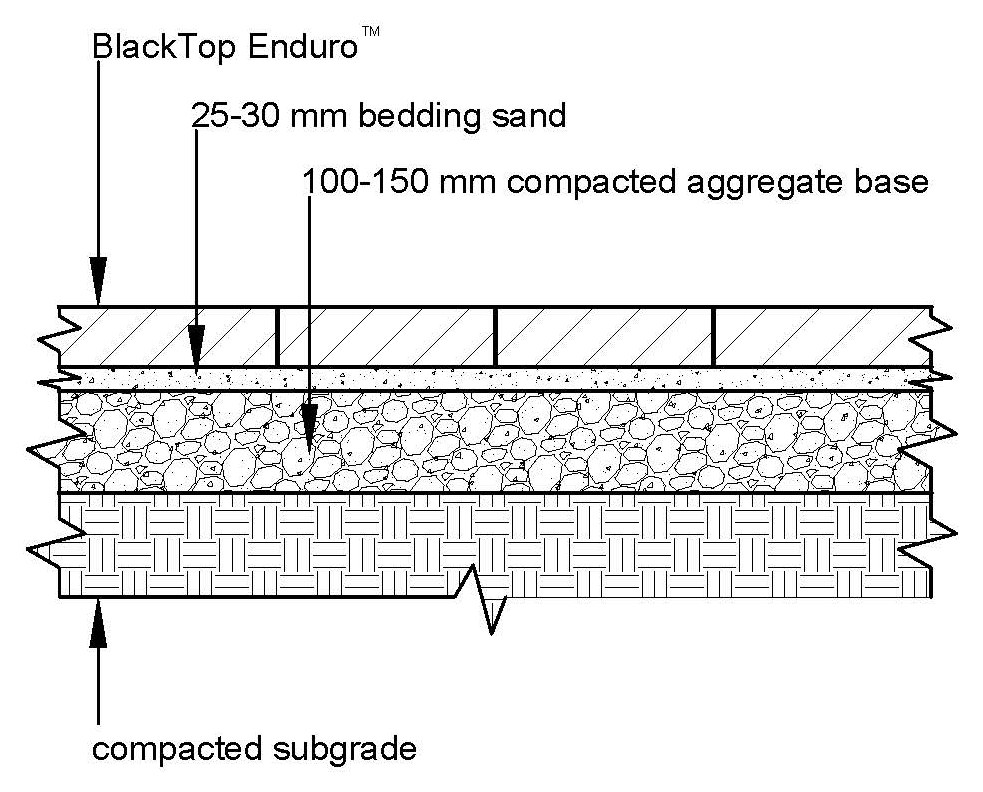
Base and setting bed. Between the subgrade and the pavers sits a compacted aggregate base, 100 to 150 mm thick, topped by a 25 mm layer of bedding sand. Together they transfer the load of vehicular traffic from the pavement down to the subgrade.
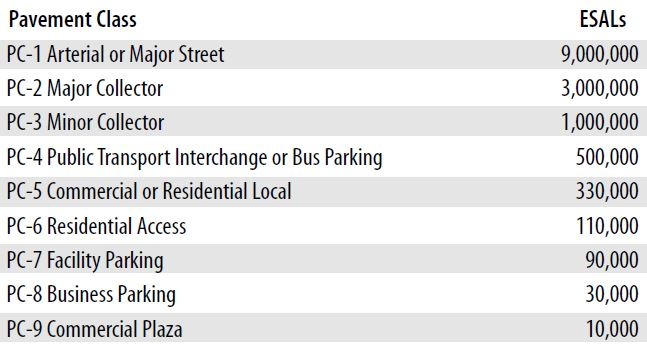
Equivalent single-axle loads (ESALs) measure the pavement damage of each vehicle type relative to a standard 18,000-pound axle. A passenger car has a load factor of about 0.0004 — it takes roughly 2,500 cars to equal one ESAL — while a fully loaded fire truck can reach 10 ESALs. Once traffic loading is calculated, paver thickness and aspect ratio are selected to maximize performance and prevent rotation under load.
Two thicknesses serve vehicular traffic. The 80 mm paver suits local, commercial, and minor collector roads to roughly 1,000,000 ESALs. The 100 mm paver suits major collector and arterial roads to roughly 9,000,000 ESALs. At 100 mm, the BlackTop Enduro™ is rated for all of these classes — local, commercial, minor collector, major collector, and arterial.
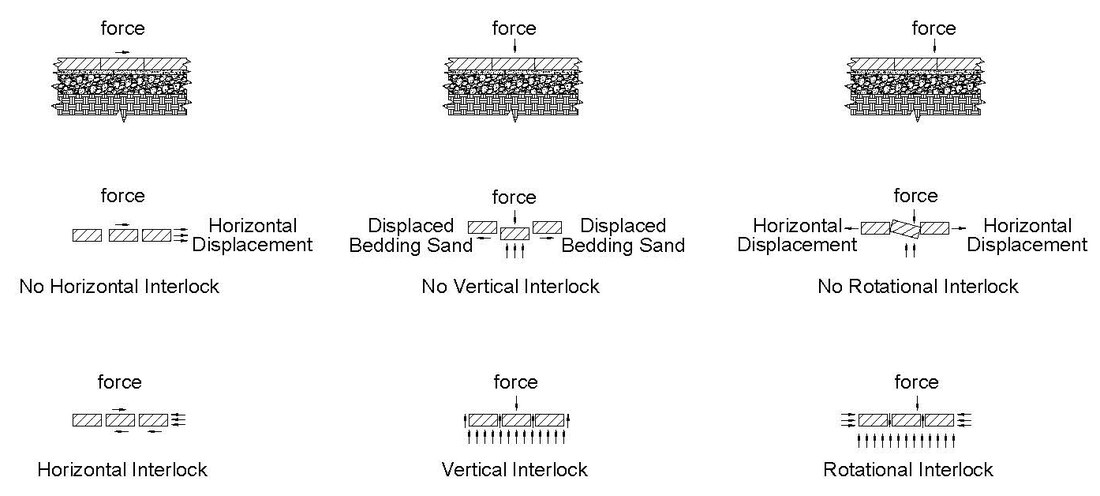
Interlock governs segmental pavement performance, ensuring the finished surface acts as one integrated course rather than a field of separate units. Three types must be achieved to transfer load from unit to unit:
Horizontal interlock comes from the laying pattern, dispersing the forces of turning, braking, and accelerating. Herringbone is the most effective pattern and should always be used in vehicular applications. Vertical interlock transfers load paver-to-paver through the joint material, preventing any unit from moving up or down independently. Rotational interlock is achieved through rigid edge restraints, correct paver thickness and aspect ratio, and a slight crown in the pavement.
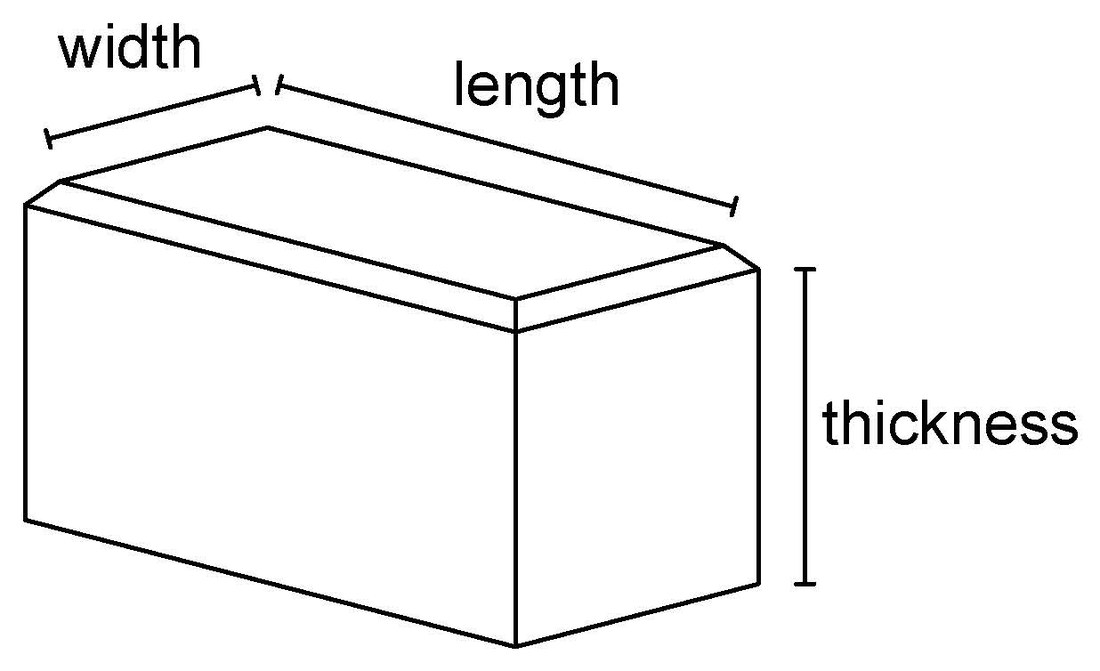
Aspect ratio — paver length divided by thickness — ensures pavers provide proper rotational interlock and cannot be rotated out of place by point loads. Vehicular pavers should not exceed a 3:1 aspect ratio; the BlackTop Enduro™ comes in well under, at 2:1.
Plan ratio — length divided by width — should be 2:1 for systems with frequent heavy vehicular loads, paired with a herringbone pattern for the best horizontal interlock. The BlackTop Enduro™ plan ratio is 2:1.
For vehicular applications, the designer must assess traffic loading and movement, edge restraint, and lateral forces to confirm the pattern provides proper horizontal interlock for the site. Pavements carrying vehicular traffic should be installed in a herringbone pattern — either 90- or 45-degree — which delivers the best possible interlock. The BlackTop Enduro™ is suited to either.
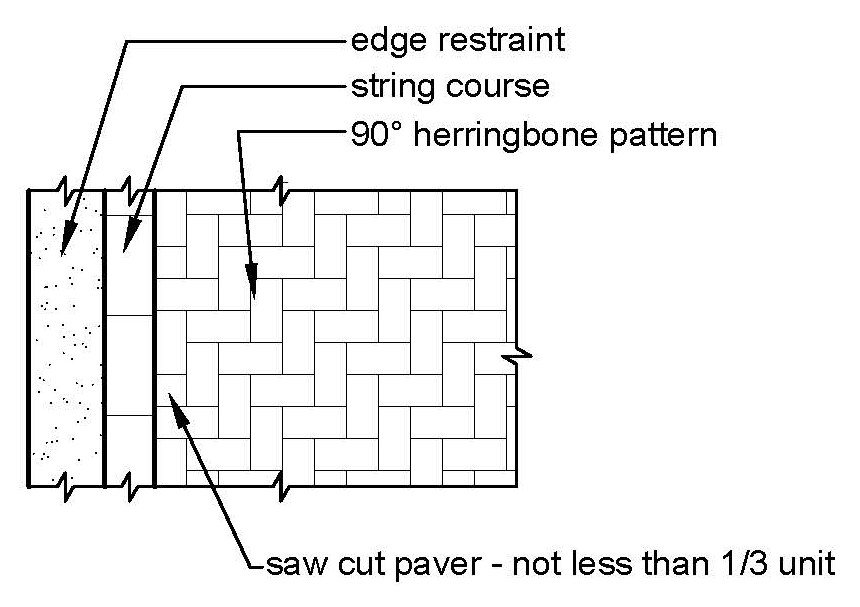
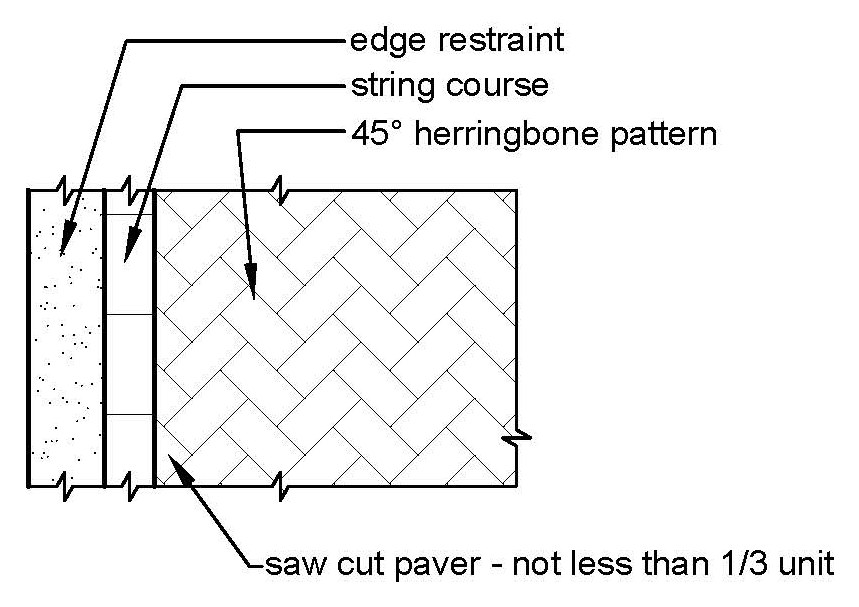
Herringbone, 90° and 45°
These standards are what let the roads market be more than aspiration: the product is engineered, today, for the classes of road we intend to serve.